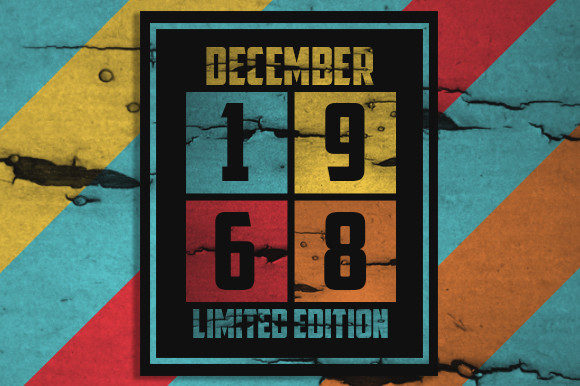
Retro December 1968 Limited Edition
As a designer and embroidery product reviewer, I’ve seen my fair share of digital files. But when I came across the Retro December 1968 Limited Edition, I knew it had potential. It’s not just another design—it’s a nostalgic piece with a distinct visual personality that could work well in the right context. Let’s break down what this design offers and where it truly shines.
The First Impression: A Nostalgic Visual Statement
The Retro December 1968 Limited Edition immediately evokes a sense of vintage charm. The layout is clean, with a strong central motif that feels like it belongs on a classic poster or a hand-painted sign. The detail level is moderate, which makes it versatile but also means it might not be ideal for ultra-detailed projects. The theme is straightforward—holiday, retro, and slightly whimsical. It’s the kind of design that would fit well on a custom embroidered tote bag, a holiday sweatshirt, or even a baby onesie with a timeless feel.
The shape is balanced, with enough negative space to avoid looking cluttered. It doesn’t scream for attention but still commands it. This makes it a good choice for small business owners who want something that feels authentic without being overwhelming.
Real-World Embroidery Performance
When testing the Retro December 1968 Limited Edition on different fabrics, I noticed a few key points. On standard cotton or denim, the design held up well, especially with a proper stabilizer. However, on thinner or stretchy materials, it required extra care to prevent puckering or distortion. For instance, if you’re planning to use it on a baby onesie or a thin t-shirt, make sure to use a tear-away or water-soluble stabilizer to keep the stitches tight.
This design works best on flat surfaces. If you’re trying to embroider it on a cap or a curved surface, the corners might not come out as sharp. It’s also not the best choice for very small hoop sizes, as some of the finer details could get lost. That said, it’s perfect for larger items like tote bags, sweatshirts, or aprons where the design can be placed prominently.
Where to Use It (and Where to Be Careful)
The Retro December 1968 Limited Edition is ideal for custom apparel, especially in the holiday season. It would look great on a sweatshirt or a tote bag, adding a touch of vintage flair to everyday wear. It’s also a solid choice for personalized gifts, like embroidered pillow covers or kitchen towels. Its clean lines make it easy to incorporate into a handmade product line, whether you’re an Etsy seller or running a small shop.
However, there are a few areas where caution is needed. If you’re working with dark fabric, the design might not show up as clearly unless you adjust the thread color. On textured or stretchy materials, the stitch density could cause the design to look uneven. Also, if you plan to use it on layered garments or products that will be washed frequently, make sure the stitches are secure and the design is tested thoroughly before finalizing any project.
Impact on Visual Appeal and Customer Perception
One of the biggest strengths of the Retro December 1968 Limited Edition is its ability to elevate a finished product. When stitched properly, it adds a professional touch that can make a handmade item stand out. Customers often respond positively to vintage-inspired designs, especially during the holiday season. It gives a sense of authenticity and timelessness that can increase the perceived value of a product.
For small business owners, this design can help build brand consistency. If your shop has a retro or vintage aesthetic, this could be a valuable addition to your design library. It also makes for a great printable mockup, allowing you to showcase the design on different items before committing to production.
Practical Designer Notes
Before using the Retro December 1968 Limited Edition in any project, I recommend testing it on scrap fabric first. This will give you a better idea of how the stitches look on different materials and help you adjust your settings accordingly. Check the thread color contrast, especially if you’re using it on dark fabric. A lighter thread might be necessary to ensure visibility.
Review the stitch density to see if it matches your project’s needs. If the design is too dense, it might cause bulkiness or affect the flexibility of the fabric. Confirm the hoop size required for the design—this will impact how you place it on your project. Also, inspect the small details closely. If the design includes tiny lettering or intricate elements, make sure they’re clear and legible after stitching.
Finally, always check the licensing terms before selling any finished items or digital products. Even though the Retro December 1968 Limited Edition is a digital download, it’s important to confirm what you’re allowed to do with it. Whether you’re an Etsy seller or a craft business owner, understanding these terms can save you from future headaches.
Final Thoughts: A Design Worth Considering
The Retro December 1968 Limited Edition isn’t a one-size-fits-all design, but it has a unique charm that can work well in the right context. It’s best suited for projects that benefit from a vintage aesthetic, such as holiday merchandise, custom apparel, or personalized gifts. With proper preparation and attention to detail, it can become a valuable asset for any embroidery designer or small business owner.
If you’re looking for a design that feels authentic and has a strong visual identity, the Retro December 1968 Limited Edition is worth exploring. Just remember to test it thoroughly and consider the practical aspects of using it in real-world projects.